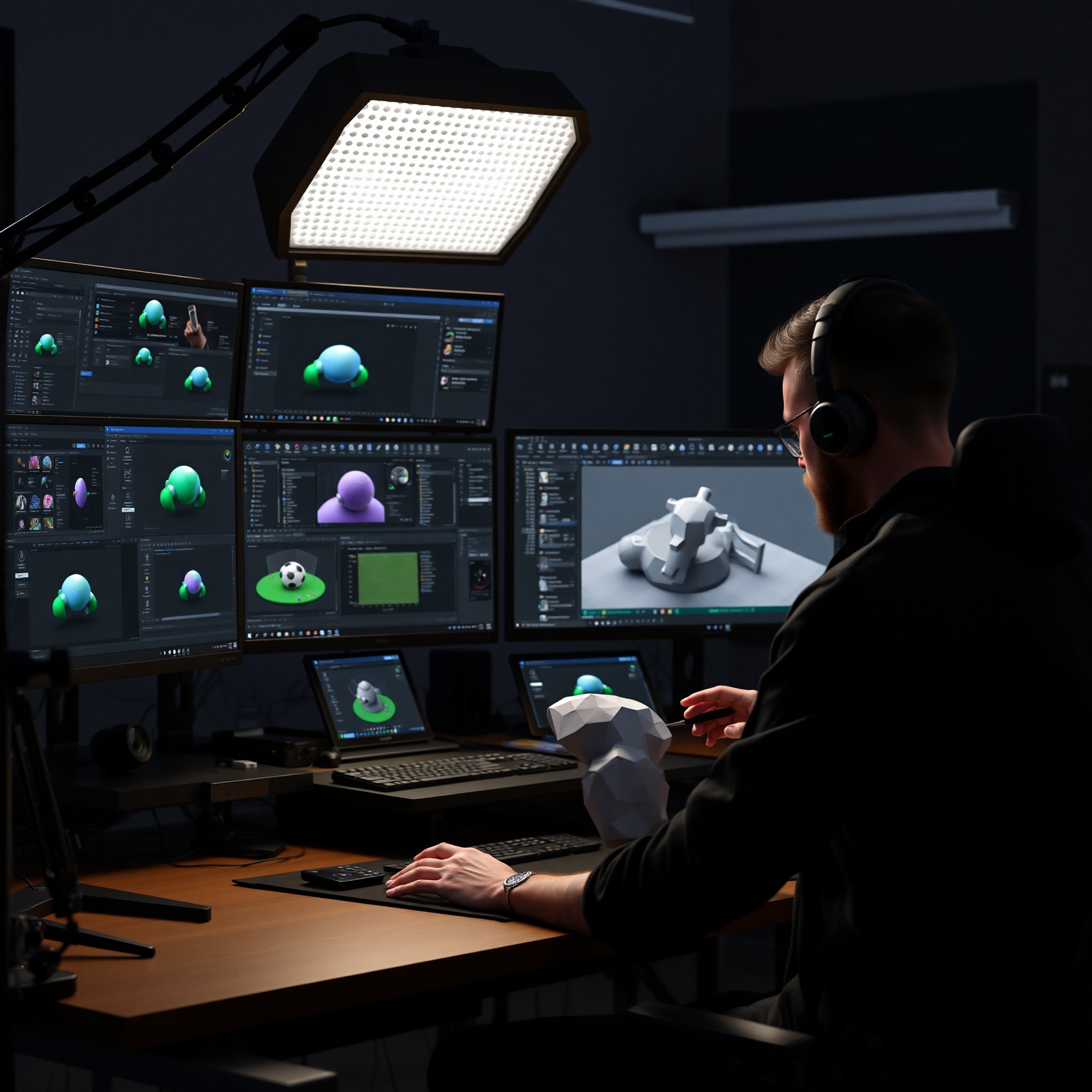
Mastering 3D Modeling for Sports Commercials
Learn essential 3D modeling techniques used in premium sports advertising to create photorealistic assets that seamlessly integrate with motion graphics workflows.
Explore ArticleDiscover professional motion graphics methods to bring static designs to life with fluid, engaging animations that capture viewer attention instantly. Master the techniques used in premium 3D animation and sports commercial production.
Motion graphics represent the intersection of graphic design and animation, creating visual communications that move and evolve in real-time. Unlike traditional animation that focuses on character movement, motion graphics emphasize typography, shapes, and data visualization with purposeful movement patterns. Professional motion graphics require a deep understanding of timing, spacing, and visual hierarchy to ensure animations enhance rather than distract from the core message.
The foundation of effective motion graphics lies in understanding the principles of animation established by Disney animators decades ago. Squash and stretch, anticipation, staging, follow-through, and overlapping action form the bedrock of believable motion. When applied to digital graphics, these principles create animations that feel natural and professional, whether you're animating a corporate logo or creating dynamic transitions for a sports broadcast.
Key Principle: Every animation should serve a purpose. Movement must communicate information, guide viewer attention, or enhance emotional impact. Purposeless motion detracts from your message and exhausts viewer attention span.
Professional motion graphics demand attention to frame rates, rendering quality, and color accuracy. Working at 60fps ensures smooth playback on modern displays, while understanding color spaces and gamma correction prevents your carefully crafted animations from appearing washed out or oversaturated in final delivery formats.
Professional motion graphics employ specific techniques to create impact and engagement. These methods have been refined through countless commercial productions, particularly in sports advertising where dynamic visual storytelling drives viewer connection and brand recall. Understanding and mastering these techniques separates amateur animations from broadcast-quality work.
Creating broadcast-quality motion graphics requires a structured workflow that balances creativity with technical precision. Professional animators follow a systematic approach that ensures consistency, maintains quality standards, and allows for efficient revisions and refinements throughout the production process.
This structured workflow ensures nothing falls through the cracks and maintains consistent quality throughout the production. Professional teams follow this process religiously, adapting it slightly based on project requirements but maintaining the core discipline that separates premium work from rushed productions.
Professional sports commercials and high-end brand animations push motion graphics techniques to their absolute limits. These productions demand sophisticated visual effects, seamless 3D integration, and pixel-perfect execution. Understanding how industry leaders execute complex animation sequences provides invaluable insights for elevating your own work.
Commercial-grade motion graphics often combine multiple techniques simultaneously: dynamic 3D camera work, complex particle systems, precise color grading, and sophisticated sound design all working in perfect synchronization. The animations you see in premium sports advertising represent countless hours of refinement, testing, and iteration. Every frame contributes to a cohesive visual narrative designed to maximize viewer engagement and brand recall.
Professional techniques include rendering multiple passes for post-production flexibility: beauty passes, shadow passes, ambient occlusion passes, and depth passes. This multi-pass approach allows colorists and compositors to fine-tune every element independently, achieving polish and precision impossible in single-pass rendering. Understanding these technical requirements shapes how professional animators approach complex projects from the beginning.
The convergence of motion graphics, 3D animation, and live-action integration defines contemporary commercial production. Seamlessly blending these elements requires deep technical knowledge, artistic sensibility, and extensive practical experience. Success demands mastery of software tools, understanding of color science, knowledge of broadcast specifications, and an instinctive feel for timing and pacing that comes only through dedicated practice.
Dynamic motion graphics represent a powerful medium for visual communication, combining artistic vision with technical precision. Master the fundamentals of animation principles, develop systematic workflows, and continuously refine your easing and timing skills. The most compelling motion graphics often employ subtle, sophisticated movement rather than flashy effects—restraint combined with technical excellence creates professional impact.
Study professional commercial work, particularly sports advertising where motion graphics excellence is non-negotiable. Analyze how movement guides viewer attention, how color grading establishes tone, and how sound design reinforces visual storytelling. Invest in mastering your software tools completely, then focus on developing the artistic sensibility that transforms technical proficiency into compelling visual narratives. Your journey toward professional-grade motion graphics mastery begins with understanding these fundamental principles and dedicating yourself to continuous improvement through deliberate practice and thoughtful analysis of exceptional work.